
22 Apr Our Power, Our Planet – Earth Day 2026
2026 – Written by: Taylor L’Ecuyer, Technical Project Assistant (Co-op Student)
“Reduce, Reuse, Recycle” is more than just a slogan – it reflects one of the first ways environmental responsibility has become part of everyday life. Through simple actions like sorting waste into bins, rinsing containers before recycling, or turning used materials into something new, we learned that waste could still hold value¹. More importantly, this slogan showed us that small choices, repeated across homes, schools, and communities, could create local impact that extended far beyond our immediate surroundings.
That same idea is reflected in this year’s Earth Day theme, “Our Power, Our Planet”, which highlights the role local action can play in creating broader environmental change. While sustainability challenges are often discussed on a global scale, meaningful progress can be shaped by the choices communities make close to home².
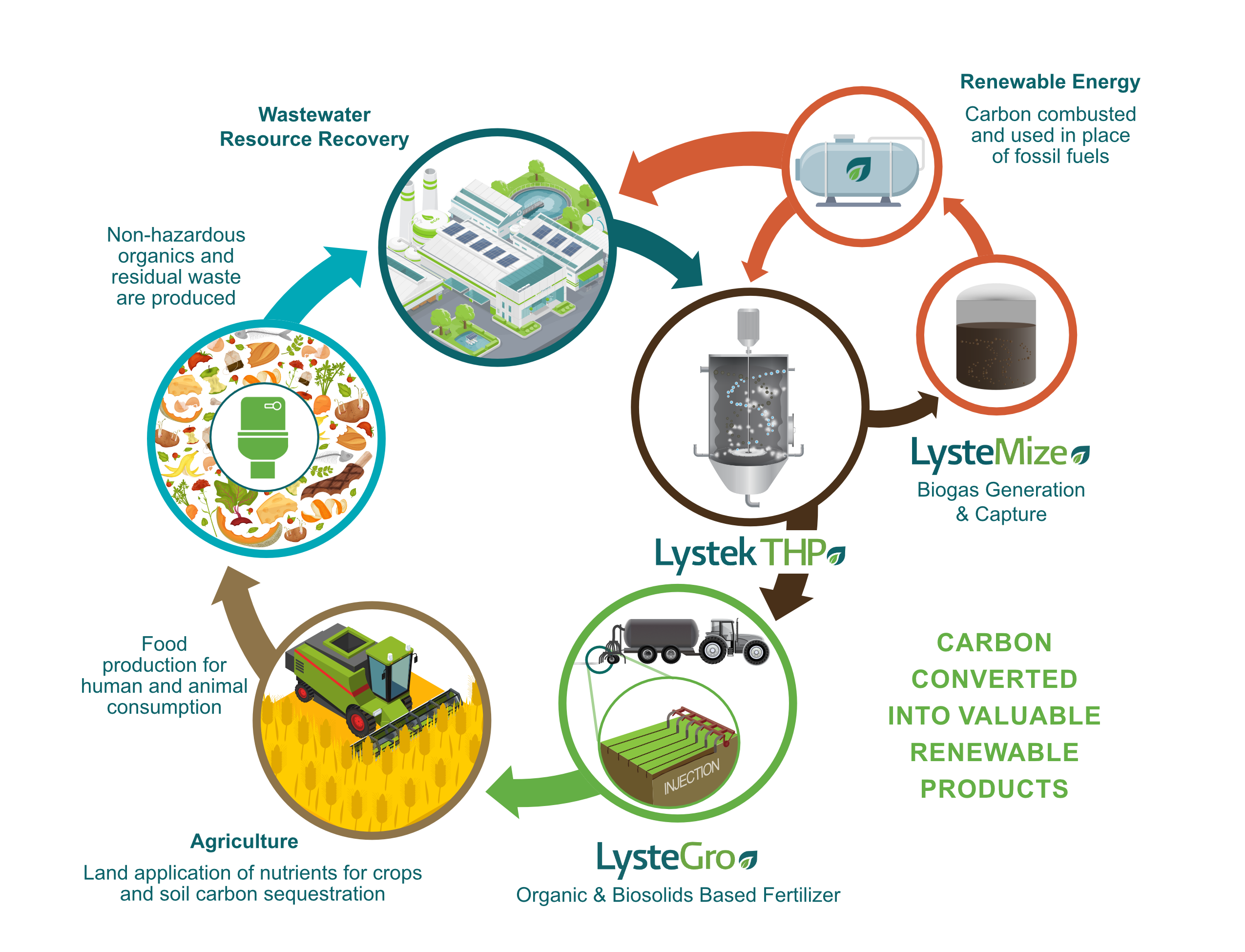
This broader perspective of waste reduction, resource recovery, and sustainability is central to Lystek’s approach to residuals management. Our technologies support circular nutrient and energy pathways, helping turn non-hazardous organics and residuals into useful resources. Through products like LysteGro® Fertilizer and LysteMize® Digestion, Lystek demonstrates how local resource recovery can create meaningful value for local communities.
Reducing Emissions Through Resource Recovery
Biosolids are typically handled under three primary management categories: land application, landfill disposal, or incineration. When utilities transition from disposal or destruction (incineration) oriented management pathways to resource recovery via beneficial land application, additional GHG emission reductions are realized beyond the fertilizer offsets.
Lystek’s Fairfield-Suisun Sewer District Organic Materials Recovery Center (FSSD OMRC) is a regional facility owned and operated by Lystek that receives biosolids and other organic wastes from the San Francisco Bay Area and other surrounding communities in Northern California to process into LysteGro fertilizer. In 2025 the facility displaced 26,500 metric tons of CO2e by the transformation and beneficial use of biosolids from its customers. This is one example of how Lystek works with local communities to reduce emissions previously associated with landfill diversion, emission intensive operations, and conventional fertilizer use. Quantifying the reduction in carbon footprint helps provide a clearer picture of local environmental value to our utility partners.
Returning Organic Carbon and Nutrients to Soil
LysteGro offers an alternative to conventional fertilizer pathways by returning organic carbon as well as macro- and micronutrients to agricultural soils through land application. The fertilizer derived from biosolids and other organic wastes supplies macro-nutrients, including nitrogen, phosphorus, and potassium, and other micro-nutrients, like sulphur, calcium, iron, and magnesium. The organic matter in LysteGro also supports soil health by improving water-holding capacity, soil structure, and microbial activity.
By transforming residuals into a valuable fertilizer or soil amendment, waste resources are diverted from disposal and returned to productive agricultural use. Returning these valuable nutrients to soil has the added benefit of reducing reliance on, and in some cases entirely replacing, conventional chemical fertilizers, which in turn further reduces the carbon footprint associated with these agricultural operations.
Opening Pathways for Biogas Recovery
Anaerobically digesting biosolids and other organic wastes opens pathways for energy recovery through the collection of biogas. LysteMize Digestion offers generators an energy efficient means to generate biogas.
The Southgate OMRC in Dundalk, Ontario is another regional facility owned and operated by Lystek that receives biosolids and organic wastes from generators across Southern Ontario, including the Greater Toronto Area. The materials received in Dundalk are processed into LysteGro fertilizer and then discharged to digestion reservoirs. While the fertilizer product digests in storage with no supplementary mixing or heating, biogas is generated and captured through a gas management system. This facility has demonstrated an average 35% additional volatile solids reduction on already anaerobically digested feedstocks, for net positive biogas generation.
LysteMize Digestion is also being explored in the LysteMize Livestock Waste Characterization Study, a research project funded by Natural Resources Canada that is expanding the feasibility of the types of livestock farms where digestion is an applicable pathway to renewable energy and clean fuel production in rural communities.
Reusing Biogas as a Local Energy Source
Raw biogas can be used on-site for THP or building heating directly, used to generate renewable electricity, or can be upgraded to concentrate the methane fraction of the material for use by consumers as other recovered energy products:
- Renewable natural gas (RNG) injected to a local pipeline can divert natural gas emissions (>96% CH4)3
- Compressed natural gas (CNG) can power trucks to divert diesel emissions (>85% CH4)4
This adds another layer of value recovery by connecting organics treatment to on-site energy use.
In this way, biogas becomes both a practical and symbolic example of “our power.” It shows how the same material stream can support multiple beneficial outcomes – from nutrient recovery to emissions reduction, to energy reuse – while helping local wastewater and biosolids systems recover more value from what they already manage.
Local Solutions, Broader Impact
Environmental progress is often built through practical decisions made close to home, and Lystek is proud to drive this mission forward in all our projects. Whether that means returning nutrients to soil, reducing emissions through diversion, or creating new pathways for biogas recovery and renewable energy use, local systems can create impacts that reach beyond a single site. Earth Day is a reminder that sustainability is not only shaped by large-scale change, but also by everyday choices, infrastructure, and innovations that help communities manage resources more effectively.
On this Earth Day, Lystek is proud to support local solutions that help power our planet!
Nothing wasted.
Everything to gain.
1: Reducing municipal solid waste – Canada.ca
2: Decoding Earth Day 2026: Our Power, Our Planet | Earth Day
3: Renewable Natural Gas | US EPA